All case studies · Ecommerce · Egypt · cash on delivery
A cold launch in Egypt: tracking verified before the first pound was spent
A new brand entered the Egyptian market with no pixel history, no creative and no data, so the first work was verified tracking and a 3×3 creative sprint, and budget only scaled on profit after cancellations.
Summary
The brand launched cold: no working pixel, no creative library and no purchase data for the algorithm to learn from. We set the Pixel and CAPI to fire on the confirmed order, shipped a 3×3 creative sprint with a written hypothesis per ad, and raised budget only on creatives that cleared a profit threshold written before launch. The first 30 days are in Exhibit 1, read off the store back end.
- Period
- First 30 days
- Pixel + CAPI
- Verified pre-launch
- Creative sprint
- 3×3
Where did the brand stand before launch?
A new brand launching cold into the Egyptian market. No pixel history, no creative library, no purchase events for the algorithm to learn from, and no evidence the offer would hold up once it met people who had never heard of it. Everything a normal optimisation plan depends on was missing, so before scaling could even come up there had to be something worth scaling.
What would have broken the launch if we had spent straight away?
- The pixel fired on page load rather than on the confirmed order, which would have taught the algorithm to find people who browse.
- The product page led with the discount instead of the reason to buy, so the offer had no argument behind it if the discount ever came off.
- There was no creative library at all, which meant the first week would be a hypothesis test more than a launch.
What was done before the budget grew?
Tracking before spend
Pixel and Conversions API built server-side with a shared event ID so Meta deduplicates instead of double counting, then every event fired by hand and checked in Events Manager before the first pound went out. In cash on delivery this matters twice: the browser event and the confirmed order are different moments, and an account that cannot tell them apart will scale toward the wrong one.
A 3×3 creative sprint
Three hooks against three angles across three formats, each shipped with a written hypothesis about which element it was testing. When a creative won, we knew whether the hook, the angle or the format carried it, and the next batch started from that answer.
Scaling on profit after cancellations
Budget stepped up only on creatives that had cleared a threshold written before launch, and the threshold was net profit after cancellations and returns, not the ROAS on screen. In a COD market the gap between the two is the whole margin.
What happened in the first 30 days?
The first 30 days are in Exhibit 1, read straight off the store back end; the totals are not typed on this page. In words: the creative pipeline kept producing new winners instead of living off one lucky video, and on any given day the account could name the creative carrying sales.
How this number was measured
- Source
- The store back end (Exhibit 1)
- Period
- First 30 days after launch
- Attribution window
- Not recorded for this case
- Delivery rate used
- Not recorded for this case
- As reported
- Sales and orders as the store reports them: In the screenshot
- After measurement
- Not recorded for this case
The totals are shown only in the screenshot, not typed on the page.
Raw screenshot: Exhibit 1
The raw screenshot.
Exhibit 1
WooCommerce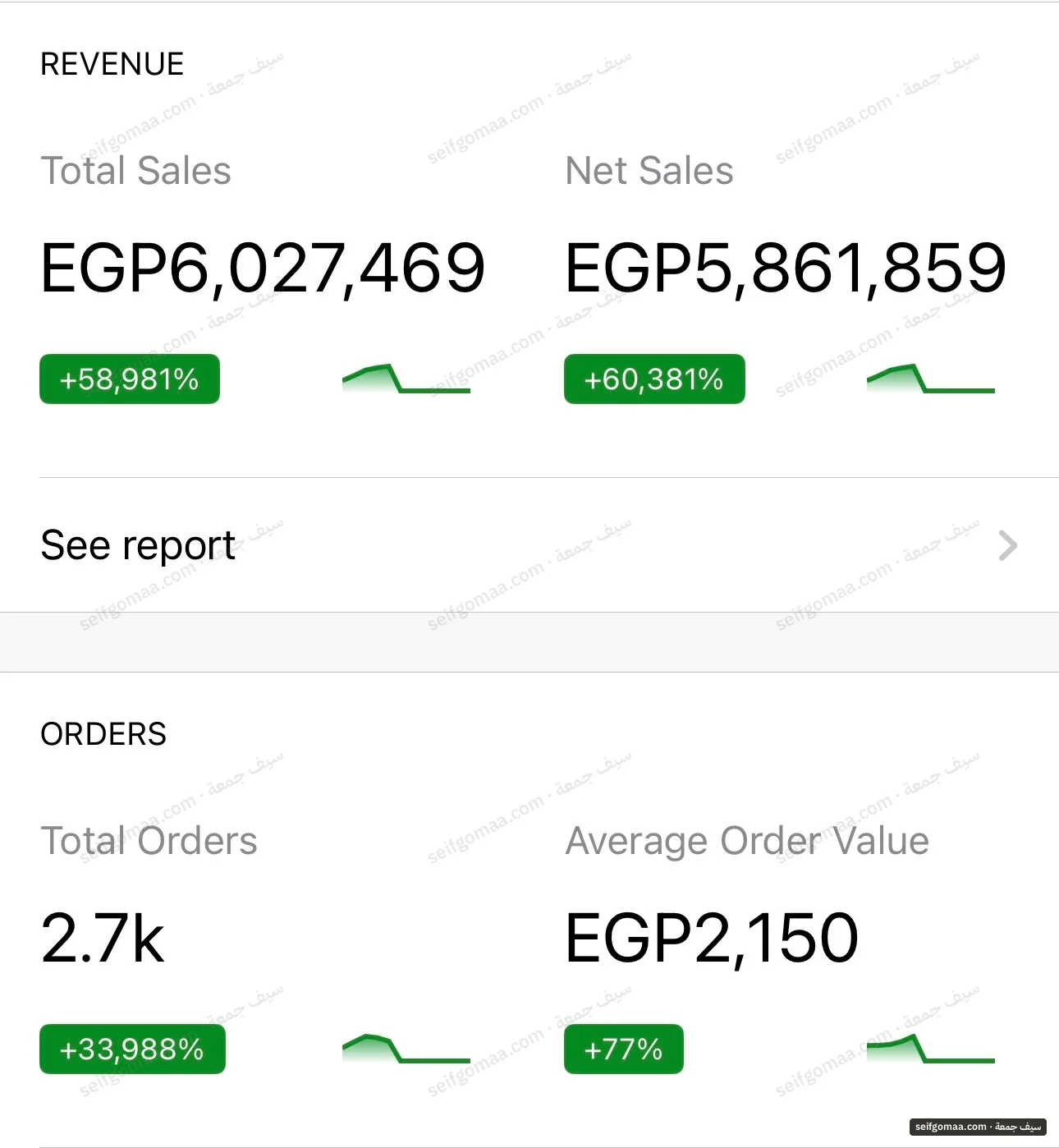
WooCommerce back end of a new cash-on-delivery brand in Egypt, covering its first month after launch. It shows sales and orders for that month. This is the raw screenshot behind the cold-launch case study, which explains how tracking and a 3×3 creative sprint were set up before budget scaled.
What should an owner take from this launch?
If you are launching a new brand, the first money you spend should buy information before it buys orders. Check that the pixel fires on the confirmed order before any spend, write down what each ad is testing, and set the profit threshold before launch so the decision to raise budget is not made on feel.
The part usually left out
A launch like this in month one is not typical and it is not repeatable on demand. The offer was strong before I touched it. What the work did was find that out in days instead of weeks, and avoid spending the budget most brands burn to learn the same thing.
More case studies
Ecommerce · Egypt
+85% month over month without giving back the margin
Premium retail · Egypt
A premium brand that held a high average order value without discounting
Coffee · Egypt · COD and Fawry
The account reported 5.48 ROAS. The real number was 1.80.
Fashion · Egypt · cash on delivery
Zero orders wasn't a creative problem. It was a EGP 150 problem.
Silver jewellery · Egypt · cash on delivery
A 618-product catalogue that didn't know its own break-even
Niche perfume · UAE · Shopify
A87 Fragrance: moving a UAE perfume brand from WooCommerce to a new Shopify store